Transcription and regulation of gene expression.
Transcription leads to synthesis of RNA molecules (with their special functions e.g. tRNA, tmRNA, rRNA) and protein synthesis. There are several examples of regulating the gene expression by the secondary structure of DNA. Apart from the situation mentioned already in replication, that regions of DNA with defined primary structure (regulatory sites such as oriC) form characteristic secondary structure thus enabling the proteins to interact correctly with the sequence the other mechanisms are involved. The best known instances of regulating gene expression by changes in DNA structure come from studies on circularised DNA (bacterial genome, plasmids). The most important factor here is supercoiling. It was found that initiation occurs more frequently from a supercoiled DNA. Usually transcription of genes is activated by reducing the number of supercoils, but there is at least one example of activating the expression by more supercoiled DNA. In the case of genes proU and tonB, clear evidence has been found that their expression is sensitive to changes in supercoiling. Two genes coding gyrase, an enzyme which thanks to its ATPase activity introduces left supercoils to the DNA molecules are also regulated by the degree of supercoiling. When the number of writhes drops below a certain threshold, these genes are activated.
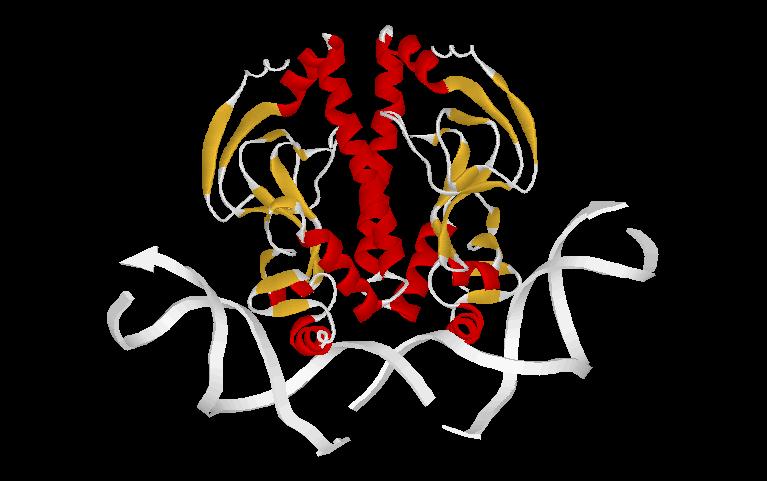
Not only supercoiling regulates transcription. Proteins called activators, with the best known example of such being protein CAP (catabolic activated protein) (as a jpg file or pdb file), bind to DNA and change its structure, usually by inducing bending. Introduction of bends leads to the initiation of transcription.